Combination Skin: Understanding It, Balancing It, Caring for It
Combination skin presents a complex puzzle, exhibiting oiliness in certain areas, dryness or normality in others, and undergoing constant seasonal changes. It’s one of the most common skin types, but also one of the most misunderstood. When you learn how to balance the different needs of each area, combination skin becomes much easier to manage. This guide breaks down what combination skin really is, how to recognize it, and how to care for it with clarity and confidence.
What Combination Skin Really Is
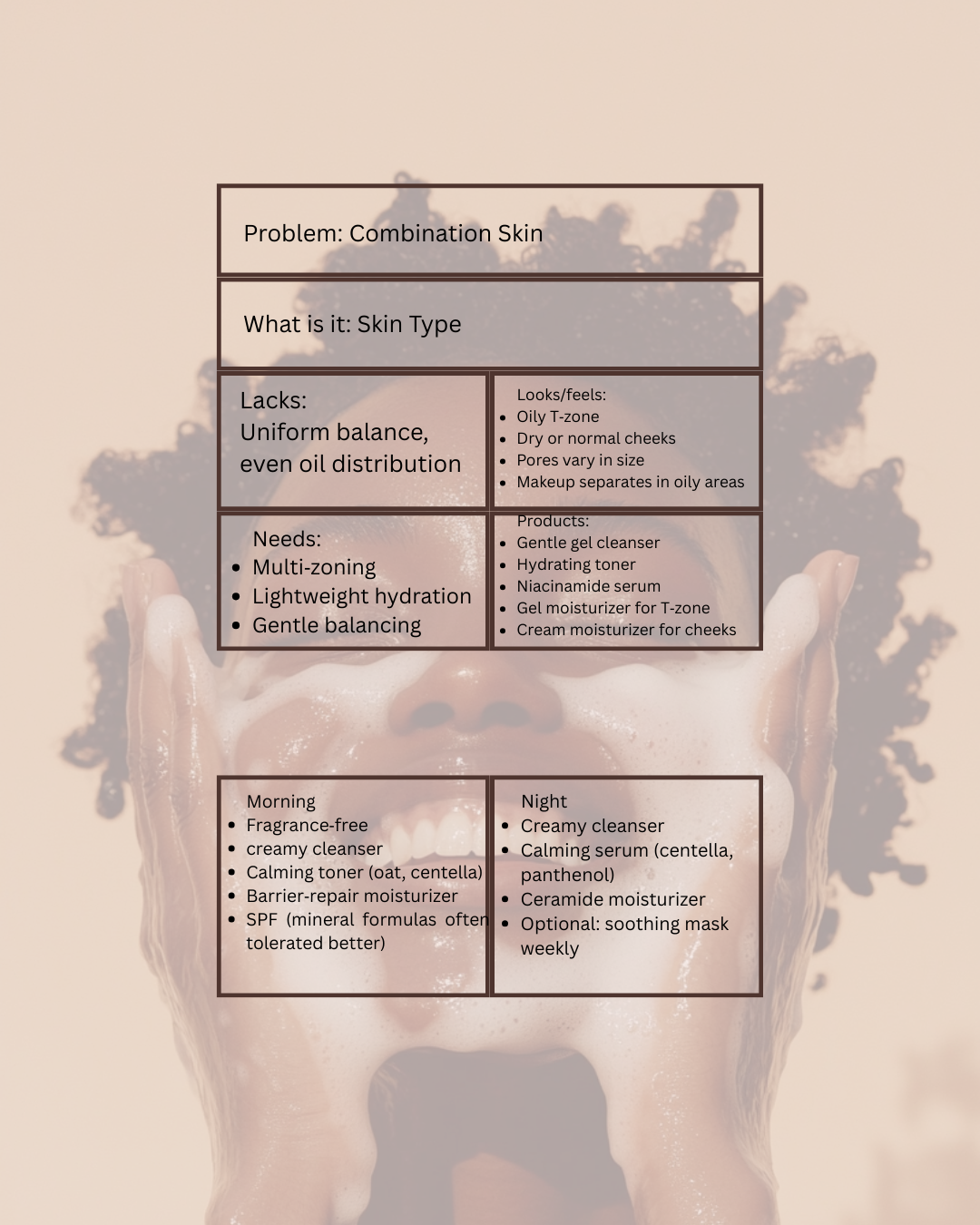
Combination skin is a skin type where different areas of the face behave differently. Most commonly:
The T‑zone (forehead, nose, chin) is oily
The cheeks are normal or dry
This happens because the sebaceous glands in the T‑zone are more active, while the outer areas produce less oil.
Combination skin isn’t inconsistent; it’s simply multi‑dimensional.
How Combination Skin Looks and Feels
Combination skin often shows up as:
Oily shine in the T‑zone
Dry or tight cheeks
Visible pores around the nose
Makeup separating in oily areas
Occasional breakouts in the T‑zone
It’s a skin type that needs balance, not extremes.
What Combination Skin Needs
Combination skin thrives when you focus on:
Balancing oil production in the T‑zone
Hydrating the drier areas
Using lightweight products that don’t overwhelm the skin
Multi‑zoning — treating different areas differently
Gentle exfoliation to keep pores clear
Think of combination skin as having two personalities; both need attention, but in different ways.
Best Ingredients for Combination Skin
These ingredients help balance hydration and oil:
Niacinamide – regulates oil and refines pores
Hyaluronic acid – hydrates without heaviness
Gentle AHAs (mandelic, lactic) – smooth texture
Lightweight moisturizers – hydrate without clogging
Clay – great for the T‑zone only
Lifestyle Tips That Help
Avoid harsh, stripping cleansers
Use different moisturizers for different areas if needed
Exfoliate gently and consistently
Blot oil instead of over‑powdering
Adjust your routine seasonally
Combination skin loves flexibility and balance.
Thank you for taking the time to learn more about combination skin and how to care for it with balance and intention. When you understand the different needs of each area, your routine becomes clearer, easier, and far more effective. I hope this guide helps you feel confident in supporting your beautifully unique skin.
With love and creativity, Tiffany
— Tiffany’s Manic Salon
