Dehydrated Skin 101: Understanding Your Skin’s Thirst
Dehydrated skin is one of the most misunderstood skin concerns. Many people assume their skin is “dry,” when in reality, it’s simply lacking water, not oil. Dehydration can happen to any skin type, even oily or acne‑prone skin, and it often shows up as tightness, dullness, or that confusing mix of feeling oily on the surface but dry underneath. This guide breaks down what dehydrated skin really is, how to spot it, and how to bring back that healthy, plump glow.
What Dehydrated Skin Really Is
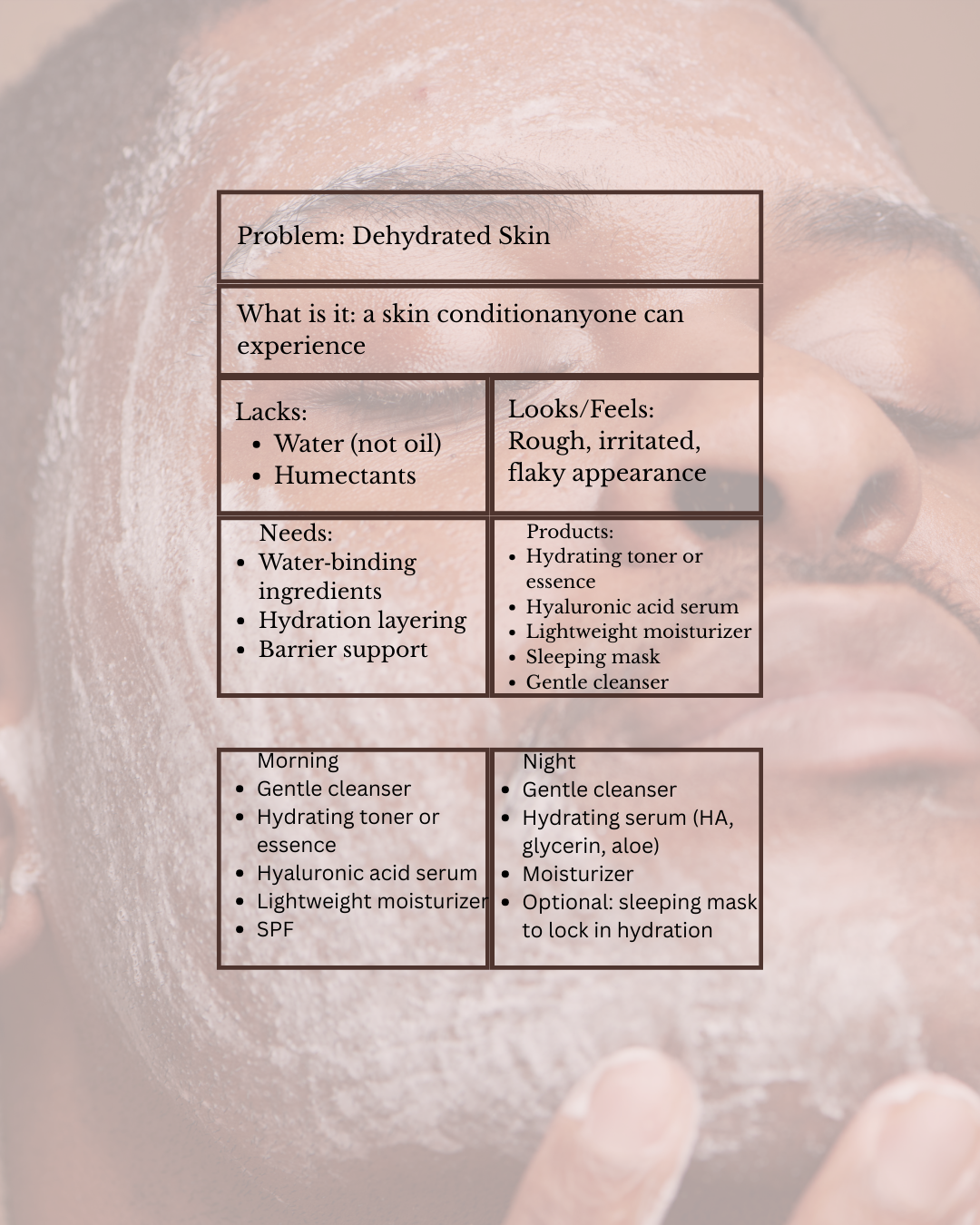
Dehydrated skin is a skin condition, not a skin type. That means it’s temporary and can change with weather, lifestyle, or products. It happens when your skin doesn’t have enough water in its outer layers. This can be caused by:
Cold or dry weather
Over-exfoliating
Harsh cleansers
Not drinking enough water
Hot showers
Air conditioning or heating
Your skin may still produce oil; it just doesn’t have enough hydration to stay balanced.
How Dehydrated Skin Looks and Feels
Dehydrated skin often shows up as:
Tightness (especially after cleansing)
Dull or tired‑looking skin
Fine “crinkly” dehydration lines
Oiliness and dryness at the same time
Makeup sitting on top of the skin or looking patchy
It’s less about flakiness and more about that “thirsty,” tight feeling.
What Dehydrated Skin Needs
Dehydrated skin thrives when you focus on:
Adding water back into the skin
Layering hydration instead of relying on one heavy product
Strengthening the barrier so water stays in
Avoiding stripping cleansers
Using humectants that draw moisture into the skin
Think of dehydrated skin like a sponge; once it absorbs water, it becomes soft, bouncy, and smooth again.
Best Ingredients for Dehydrated Skin
These ingredients help restore hydration and keep it locked in:
Hyaluronic acid – draws water into the skin
Glycerin – deeply hydrating and softening
Aloe vera – soothing and water‑rich
Panthenol – strengthens and hydrates
Hydrating toners/essences – add lightweight layers of moisture
Ceramides – help prevent water loss
Lifestyle Tips That Help
Drink water consistently throughout the day
Use a humidifier during winter
Avoid long, hot showers
Reduce caffeine and alcohol when possible
Choose gentle, non‑stripping skincare
Add hydration immediately after cleansing
These small habits help your skin stay plump and comfortable.
Thank you for taking the time to learn more about dehydrated skin and how to bring back its natural glow. When you understand what your skin is missing, you can give it the hydration and care it truly deserves. I hope this guide helps you reconnect with your skin and support it in a way that feels nourishing and empowering.
With love and creativity, Tiffany
— Tiffany’s Manic Salon
