Oily Skin: Understanding It, Balancing It, Loving It
Oily skin often gets misunderstood; people assume it’s “dirty,” “unhealthy,” or something that needs to be scrubbed away. In reality, oily skin is simply a skin type with overactive sebaceous glands, and it has its strengths and challenges. When cared for properly, oily skin can look smooth, radiant, and beautifully balanced. This guide breaks down what oily skin really is, how to recognize it, and how to support it with the right products and habits.
What Oily Skin Really Is
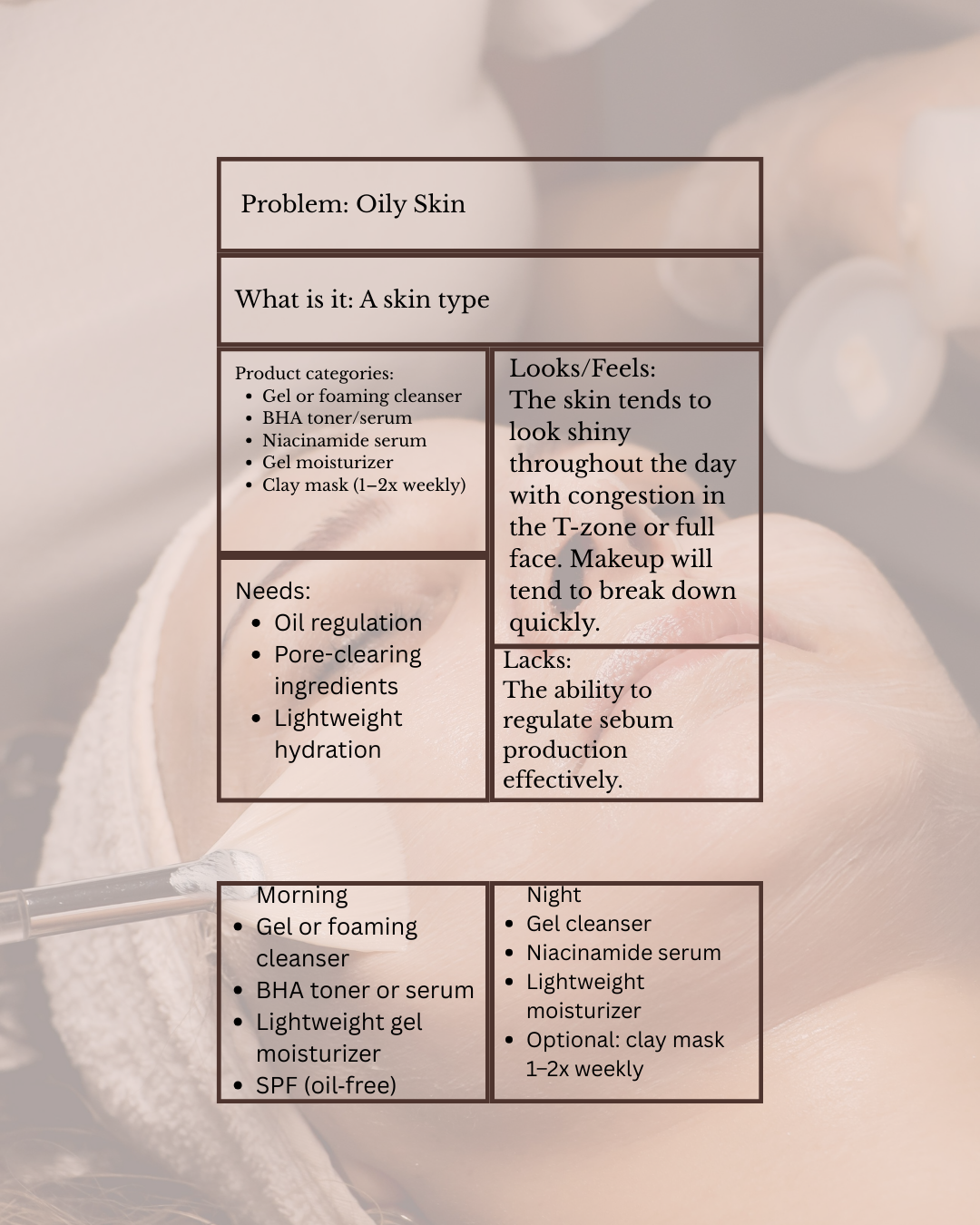
Oily skin is a skin type, meaning it’s something you’re naturally predisposed to. It happens when your skin produces more sebum than it needs. Sebum is essential; it protects your skin and keeps it soft, but too much of it can lead to shine, clogged pores, and breakouts.
How Oily Skin Looks and Feels
Oily skin often shows up as:
Shine throughout the day
Enlarged or visible pores
Frequent blackheads or congestion
Makeup sliding off or breaking down
A thicker, more resilient skin texture
Oily skin isn’t “bad”; it just needs balance, not stripping.
What Oily Skin Needs
Oily skin thrives when you focus on:
Balancing oil production, not removing it
Keeping pores clear with gentle exfoliation
Lightweight hydration (yes, oily skin still needs moisture)
Non‑comedogenic products
Consistent routines, especially cleansing
When oily skin is treated gently and consistently, it becomes smoother, clearer, and far less reactive.
Best Ingredients for Oily Skin
These ingredients help regulate oil, refine pores, and keep skin clear:
Niacinamide – balances oil and minimizes pore appearance
Salicylic acid (BHA)—clears inside the pore
Zinc – helps regulate sebum
Green tea extract – calms and reduces shine
Lightweight humectants- hydrate without heaviness
Lifestyle Tips That Help
Avoid over‑washing, it increases oil production
Use blotting papers instead of harsh powders
Clean makeup brushes regularly
Choose breathable fabrics if you’re acne‑prone
Stay consistent with exfoliation
Small changes make a big difference in oil balance.
Thanks for learning about oily skin and how to care for it. When you understand what your skin is trying to tell you, you can support it in a way that feels balanced, gentle, and empowering. I hope this guide helps you embrace your skin and build routines that truly work for you.
With love and creativity, Tiffany
— Tiffany’s Manic Salon
