Sebaceous Filaments vs. Blackheads: What’s the Difference?
If you’ve ever looked closely at your nose and seen tiny dots, you might have wondered whether they’re blackheads, but in many cases, they’re actually sebaceous filaments, a completely normal part of your skin. These two things look similar, but they’re not the same, and they need different approaches. This guide breaks down the difference in a simple, approachable way so you can understand what’s happening in your pores and how to care for your skin with confidence.
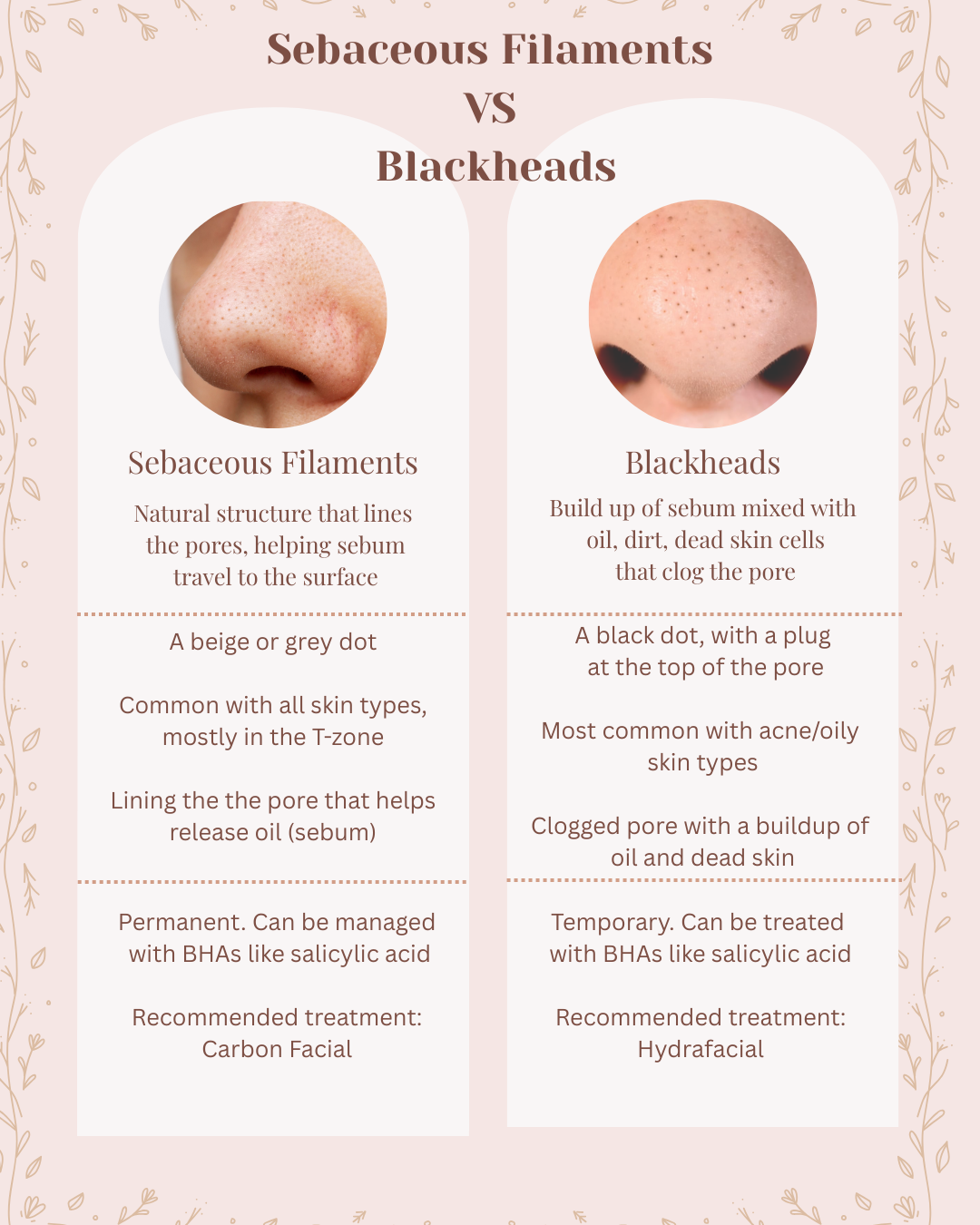
What Sebaceous Filaments Are
Sebaceous filaments are normal, natural structures inside your pores. Their job is to help move oil (sebum) from the sebaceous gland to the surface of your skin. Everyone has them, especially on the nose, chin, and inner cheeks.
How They Look
Tiny grey, tan, or yellow dots
Evenly spaced
Smooth to the touch
Not inflamed or painful
What They Need
Oil balance
Gentle exfoliation
Lightweight hydration
Consistent cleansing
Sebaceous filaments can be minimized but never fully removed; they’re part of your skin’s anatomy.
What Blackheads Are
Blackheads are a type of non‑inflamed acne. They form when a pore becomes clogged with oil and dead skin cells. The top of the clog stays open, and the oil oxidizes, turning dark.
How They Look
Dark, visible dots
Often raised or textured
Can appear anywhere but common on the T‑zone
May feel slightly rough
What They Need
Pore‑clearing ingredients
Regular exfoliation
Oil control
Consistent routines
Blackheads can be removed and prevented with the right care.
Key Differences at a Glance
Sebaceous Filaments
Normal part of the skin
Evenly spaced
Light grey/tan/yellow
Smooth, not raised
Always come back
Goal: manage appearance
Blackheads
A type of acne
Random placement
Dark brown/black
Often raised or textured
Can be extracted
Goal: treat and prevent
Best Ingredients for Each
For Sebaceous Filaments
Salicylic acid (BHA)
Niacinamide
Clay masks
Hyaluronic acid
Gentle AHAs
For Blackheads
Salicylic acid
Clay masks
Retinol alternatives (gentle resurfacing)
Niacinamide
Consistent cleansing
How to Tell Which One You Have
Ask yourself:
Is it dark and raised? → likely a blackhead
Is it light and smooth? → likely a sebaceous filament
Is it evenly spaced across the nose? → sebaceous filaments
Does it feel like a plug? → blackhead
Most people have both, especially in the T‑zone.
Thank you for taking the time to learn the difference between sebaceous filaments and blackheads. When you understand what’s happening in your pores, you can care for your skin in a way that feels gentle, informed, and empowering. I hope this guide helps you feel more confident and connected to your skin’s natural processes.
With love and creativity, Tiffany
— Tiffany’s Manic Salon
