Acne‑Prone Skin 101: Why Breakouts Happen
Acne‑prone skin can feel frustrating, unpredictable, and sometimes overwhelming, but it’s also incredibly common and absolutely manageable with the right approach. This skin type is more likely to develop clogged pores, blackheads, whiteheads, and breakouts, but that doesn’t mean it’s “bad” or “problematic.” Acne‑prone skin simply needs balance, consistency, and gentle support. This guide breaks down what acne‑prone skin really is, how to recognize it, and how to care for it in a way that feels empowering and effective.
What Acne‑Prone Skin Really Is
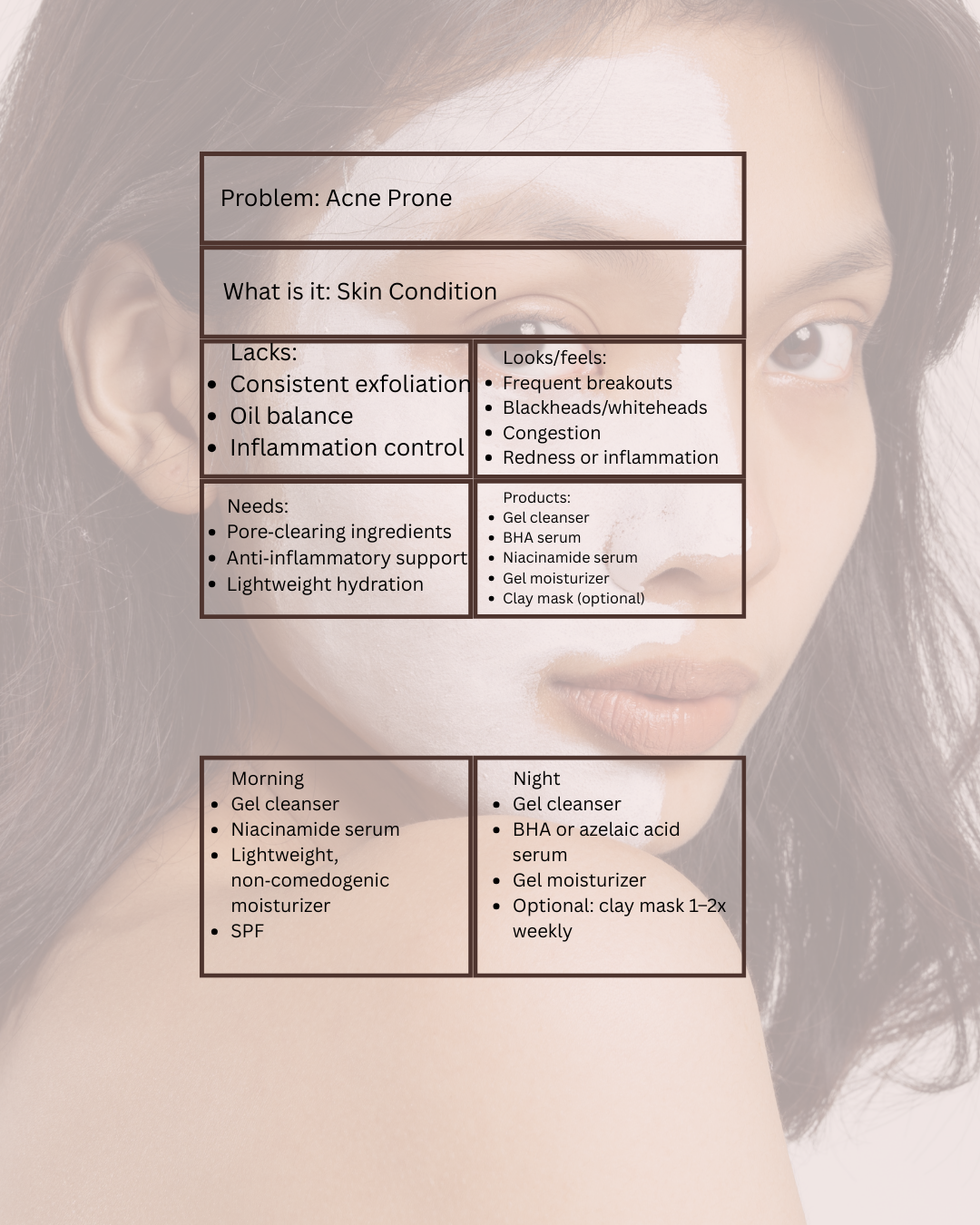
Acne‑prone skin is a skin condition where the pores clog more easily than average. This can be influenced by:
Genetics
Hormones
Oil production
Stress
Lifestyle
Products that clog pores
Acne‑prone skin isn’t always oily; dry and combination skin can be acne‑prone too.
How Acne‑Prone Skin Looks and Feels
Acne‑prone skin often shows up as:
Frequent breakouts
Blackheads and whiteheads
Congestion or bumpy texture
Redness or inflammation
Enlarged pores
Breakouts triggered by stress, products, or hormones
It’s a skin type that needs consistency and calm, not harsh scrubbing or stripping.
What Acne‑Prone Skin Needs
Acne‑prone skin thrives when you focus on:
Keeping pores clear
Reducing inflammation
Balancing oil production
Using lightweight, non‑comedogenic products
Avoiding harsh or drying routines
The goal is to support the skin, not punish it.
Best Ingredients for Acne‑Prone Skin
These ingredients help clear pores, calm inflammation, and support balance:
Salicylic acid (BHA) – clears inside the pore
Niacinamide – reduces redness and regulates oil
Azelaic acid – brightens and calms
Lightweight humectants – hydrate without clogging
Clay (kaolin, bentonite) – absorbs excess oil
Green tea extract – soothing and anti‑inflammatory
Lifestyle Tips That Help
Avoid picking or squeezing breakouts
Clean pillowcases and makeup brushes regularly
Choose breathable fabrics
Reduce heavy or pore‑clogging products
Stay consistent with your routine
Manage stress where possible
Small habits can make a big difference in clarity and comfort.
Thank you for taking the time to learn more about acne‑prone skin and how to support it with patience and intention. When you understand what your skin needs, you can care for it in a way that feels gentle, balanced, and empowering. I hope this guide helps you feel more confident in your skin and more connected to your routine.
With love and creativity, Tiffany
— Tiffany’s Manic Salon
