The 4 Stages of Acne: What’s Really Happening Under Your Skin
Acne doesn’t just appear overnight, it develops in stages. Each stage looks and feels different, and each one needs its own kind of care. When you understand what stage your acne is in, you can choose products and routines that actually help instead of accidentally making things worse. This guide breaks down the stages of acne in a simple, approachable way so you can better understand what’s happening beneath the surface.
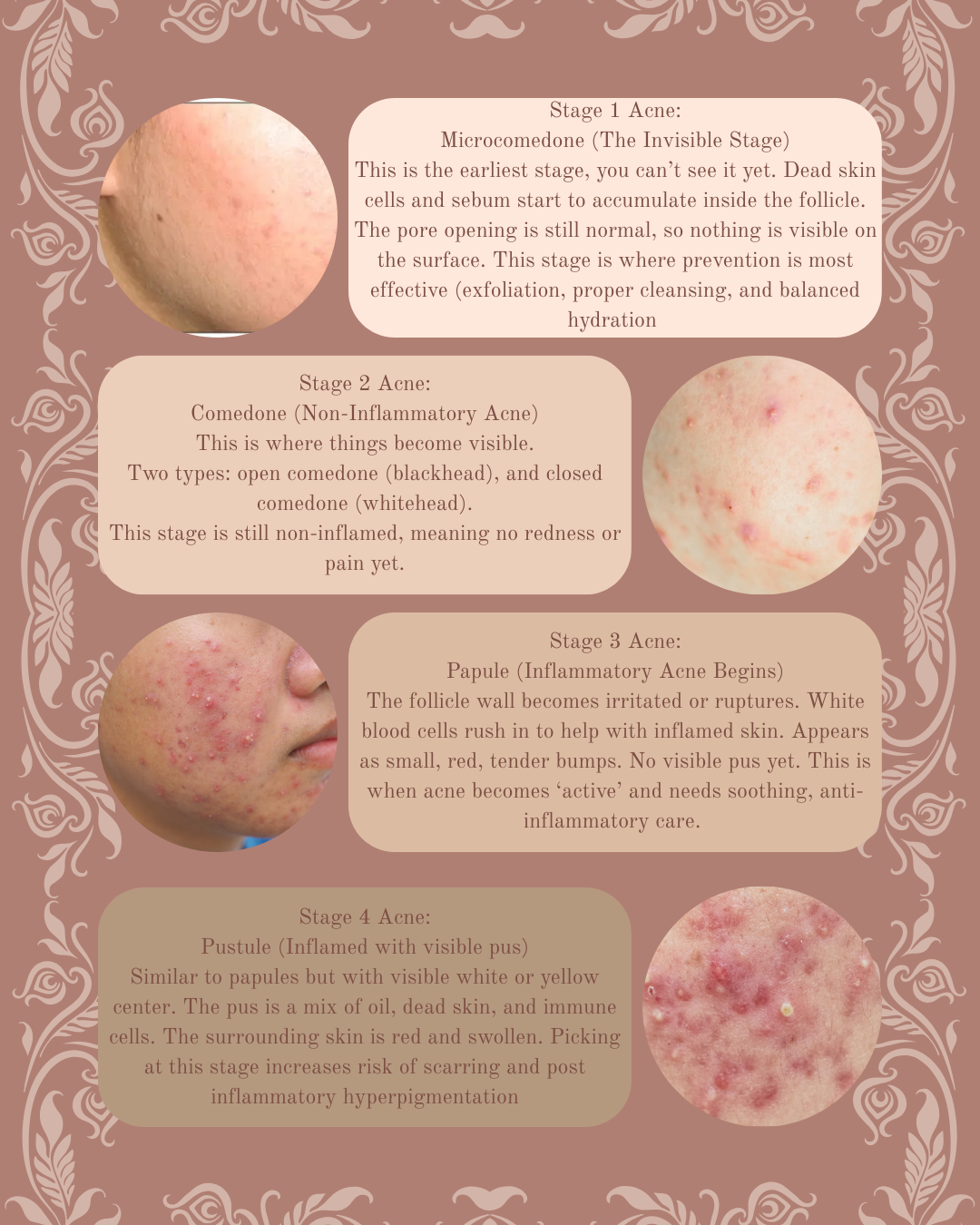
Stage 1: Clogged Pores (Microcomedones)
What It Is
This is the initial stage of acne. Dead skin cells and oil mix together and start to block the pore.
What It Looks Like
Skin texture feels bumpy
Pores look “full” or shadowed
No redness or pain yet
What Helps
Gentle exfoliation
Salicylic acid
Lightweight hydration
Stage 2: Non-Inflamed Acne (Whiteheads & Blackheads)
What It Is
The clogged pore becomes more visible.
Whiteheads = closed pores
Blackheads = open pores where oil oxidizes
What It Looks Like
Small bumps
Black dots on the nose or chin
Not painful
What Helps
Salicylic acid
Clay masks
Consistent cleansing
Stage 3: Inflamed Acne (Papules & Pustules)
What It Is
The clogged pore becomes irritated and inflamed.
What It Looks Like
Red bumps (papules)
Red bumps with a white/yellow center (pustules)
Tender to the touch
What Helps
Niacinamide
Azelaic acid
Anti‑inflammatory routines
Stage 4: Severe Acne (Nodules & Cysts)
What It Is
Deep inflammation under the skin. The pore wall breaks, causing swelling and pain.
What It Looks Like
Large, painful bumps
Deep under the skin
Can last for weeks
What Helps
Gentle routines
Anti‑inflammatory support
Professional guidance
Thank you for taking the time to learn more about the four stages of acne and how to support your skin with clarity and intention. When you understand what stage your acne is in, you can care for your skin in a way that feels gentle, informed, and empowering. I hope this guide helps you feel more confident and connected to your skin’s healing process.
With love and creativity, Tiffany
— Tiffany’s Manic Salon
